
When people hear the word “monsoon,” they often imagine days or even weeks of continuous downpours. But if you’ve spent a summer in Colorado, you know that’s not exactly what happens here.
Instead, Colorado’s monsoon season typically means sunny mornings, building clouds by afternoon, and an increased chance of thunderstorms during the evening hours.
With the North American Monsoon now beginning to influence the region, here’s what Colorado residents should know about one of our most misunderstood weather patterns.
What Is a Monsoon?
Contrary to popular belief, a monsoon isn’t defined by heavy rainfall.
Meteorologically, a monsoon is a seasonal shift in wind patterns that changes where a region receives its moisture.
For much of the year, the prevailing winds across the Southwest United States are relatively dry. During the summer months, however, strong heating over the North American continent causes a broad area of high pressure to develop over the Southwest.
As that circulation strengthens, winds shift and begin transporting moisture northward from the eastern Pacific Ocean, the Gulf of California, and occasionally the Gulf of Mexico.
That influx of moisture fuels the thunderstorms that become a hallmark of late summer across the Southwest and parts of Colorado.
Does Colorado Have a Monsoon?
The short answer is yes—but Colorado sits on the northern edge of the North American Monsoon.
The core monsoon region includes northwestern Mexico, Arizona, and New Mexico, where July through September rainfall accounts for more than half of the annual precipitation totals. In some areas of northwestern Mexico, as much as 75% of yearly precipitation falls during the monsoon season.
Colorado experiences the effects of this circulation differently.
Rather than months of widespread rain, the monsoon often provides periodic surges of moisture that increase the frequency of afternoon and evening thunderstorms, especially across the mountains and Front Range.
Some years the monsoon is robust and wet. Other years, it barely makes an appearance.
What Does Monsoon Season Look Like in Colorado?
A classic Colorado monsoon day often follows a familiar pattern:
- Morning: Mostly sunny and relatively quiet.
- Early Afternoon: Clouds begin bubbling over the mountains.
- Late Afternoon and Evening: Thunderstorms develop and drift eastward onto the plains.
- Overnight: Storms diminish, allowing the cycle to repeat the next day.
Unlike the monsoons of South Asia, Colorado’s monsoon rarely brings all-day rainfall.
Instead, precipitation tends to occur in bursts. There may be several active days in a row followed by stretches of drier weather.
Why Does the Monsoon Matter?
The summer monsoon can have both benefits and hazards across Colorado.
Benefits
Monsoon moisture can provide much-needed rainfall during one of the warmest times of the year. Increased cloud cover and precipitation often help moderate temperatures and reduce drought stress on vegetation.
These rains can also temporarily ease wildfire danger by increasing humidity and moistening fuels.
Hazards
However, monsoon storms can also become dangerous.
The increased moisture can lead to:
- Frequent lightning strikes
- Heavy rainfall capable of producing flash flooding
- Dangerous conditions near burn scars
- Small hail and gusty winds
- Rapidly changing weather for hikers and campers
Even storms that don’t appear particularly severe can dump a significant amount of rain in a short period of time.
Can We Predict How Strong the Monsoon Will Be?
Unfortunately, predicting seasonal monsoon rainfall remains one of meteorology’s biggest challenges.
Researchers continue to study how factors such as:
- The position and strength of the Southwest high-pressure system,
- Soil moisture,
- Tropical moisture from eastern Pacific storms,
- And large-scale climate patterns like El Niño and La Niña,
influence monsoon activity.
Some studies suggest that La Niña years may slightly favor wetter monsoon conditions, while El Niño years may lean drier, but the relationship is relatively weak and far from guaranteed.
Simply put, every monsoon season has its own personality.
What Should Colorado Expect This Summer?
As monsoon moisture gradually works its way into the state, Coloradans can expect an increasing chance of afternoon and evening thunderstorms over the coming weeks.
That doesn’t mean it will rain every day.
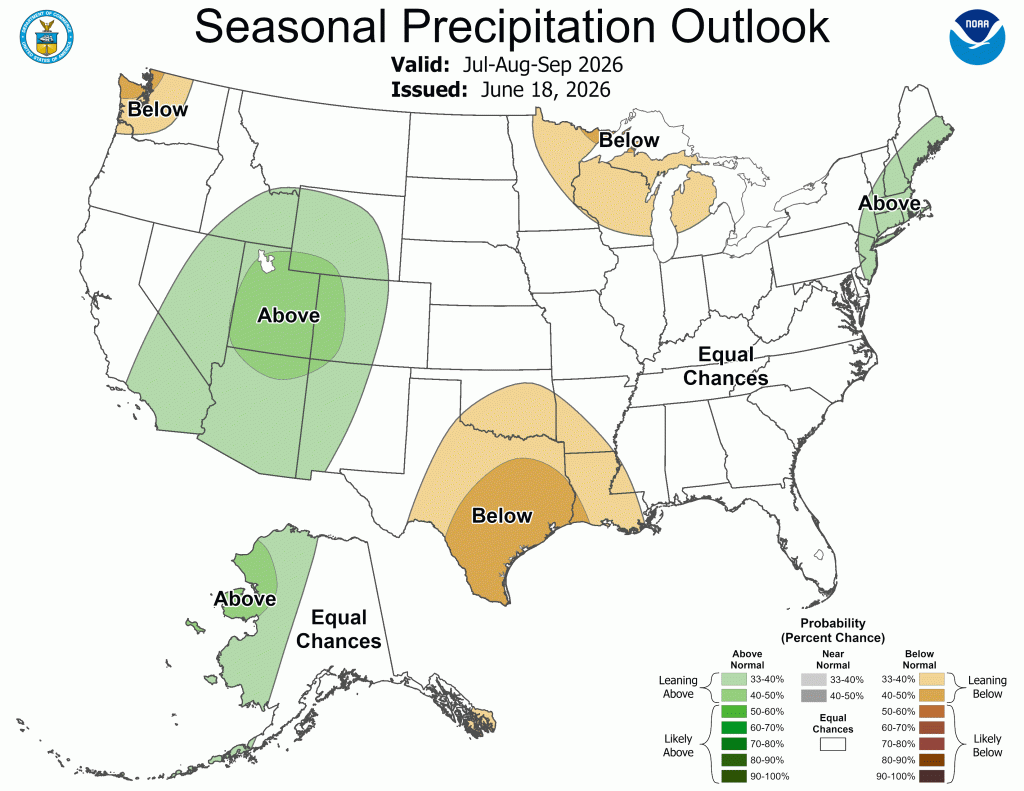
Instead, expect the weather to fluctuate between active periods featuring lightning and locally heavy rainfall and quieter stretches dominated by sunshine and warmth. However, over the next three months, precipitation is shaping up to be above average for a good portion of the state.
The Bottom Line
Colorado’s monsoon season isn’t weeks of nonstop rain—it’s a seasonal shift in atmospheric circulation that brings bursts of moisture into the state during the heart of summer.
For some, it means dramatic afternoon thunderstorms and cooler evenings. For others, it means keeping a close eye on flash flood alerts before heading into the mountains.
Either way, the arrival of the monsoon marks another chapter in Colorado’s warm-season weather story—and a reminder that summer in the Rockies is anything but dynamic.